Renter Friendly Kitchen Storage: 7 No-Drill Hacks That Save Your Deposit
A rental kitchen has little counter space and you cannot drill into walls or cabinets without risking your security deposit.
- NO DRILL
- DEPOSIT-SAFE
- Effort
- Easy
- Time
- About 2 hours
- Budget
- $25 to $60
- Steps
- 7
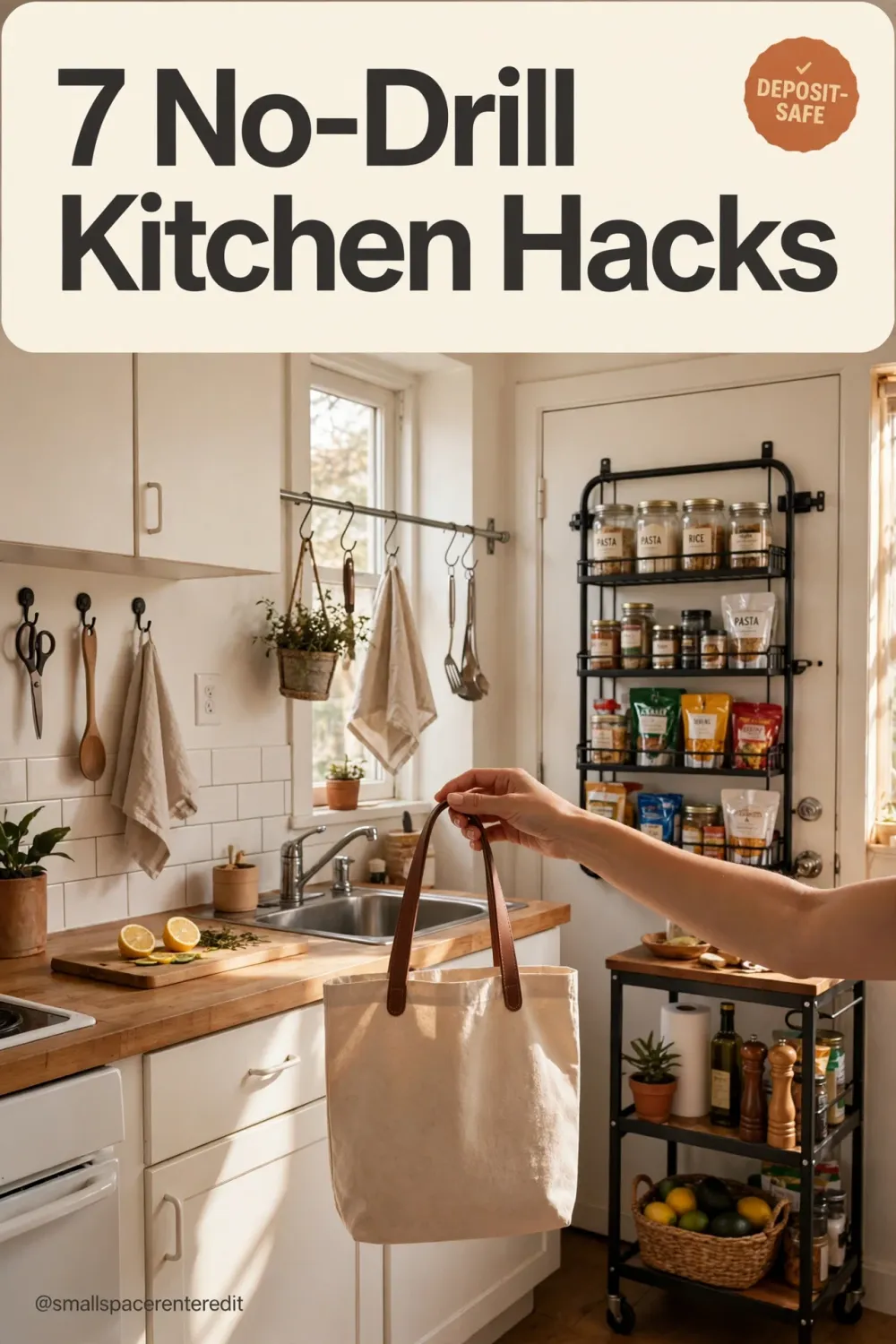
A small rental kitchen runs out of counter space fast, and most landlords do not want holes in the tile, the walls or the cabinet doors. If you are a renter in a studio or a one-bedroom, this guide is for you. These seven hacks use adhesive hooks, a tension rod, an over-the-door rack, a narrow cart and a few cabinet add-ons. None of them need a drill. Each step says what to measure first, so you do not buy something that does not fit. Always check the weight rating on the package, because adhesive and tension products differ. Also remember that adhesive can pull paint off some walls, so test a hidden spot. Go in order, or pick the hack that fixes your worst corner first.

Measure before you buy
Window frame width
Measure the inside of the frame from side to side in three spots, since frames are not always square.
Typical Tension rods are sold in ranges such as 28 to 48 in and 48 to 84 in; pick the range that includes your measurement.
Door thickness and top gap
Measure the door thickness and the space between the top edge of the door and the frame, so an over-the-door rack can hang and the door still closes.
Typical Racks vary by model; measure yours and check the product dimensions.
Floor space for a cart
Measure the open floor width, depth and the height of anything above it. Leave about 1 in around a fridge for airflow.
Typical One common utility cart is 11 in wide, 15 in deep and 24 in tall.
Cabinet depth and shelf height
Measure from the inside back of the cabinet to the inside of the door, and from shelf to shelf.
Typical Upper cabinets are usually about 12 in deep and base cabinets about 24 in; measure yours.
Measurements are a guide, not a promise. Every apartment and every product is a little different, so measure yours before you order.
What you need
- Adhesive utility hooks, large (check weight rating)Large Command-style hooks are rated 5 lb per hook on the package; always read the rating on yours.around $10Qty: 1 pack
- Tension rod for the windowCheck the weight limit on the package and the size range.Qty: 1
- S-hooksMatch hook size to the rod diameter.Qty: 4 to 6
- Over-the-door pantry rackCheck door thickness and the gap at the top.Qty: 1
- Narrow rolling utility cartOne 3-tier cart measures 11 x 15 x 24 in.around $30Qty: 1
- Cabinet turntable or shelf riserMeasure the shelf height and depth first.Qty: 1 to 2
Prices are regular retail prices we saw in November 2026. They change often, so check the store before you buy.
Before you start
- Read your lease section on alterations and ask if adhesive hooks are allowed.
- Wipe surfaces with rubbing alcohol and let them dry before any adhesive goes on.
- Check the weight rating on every package. Ratings differ by product.
- Adhesive can lift paint or damage wallpaper. Test in a hidden spot first.
Step by step
Hang your daily tools on adhesive hooks
Stick large adhesive hooks to a smooth, clean spot beside the stove or sink, such as the side of a cabinet or a flat backsplash. Hang scissors, a wooden spoon and a dish towel so they stay off the counter. Follow the package for press time and wait the full hour before hanging anything. Stay under the weight rating on the package, and keep hooks off heavily textured or peeling paint.
Run a tension rod across the window
Measure the window frame and choose a rod range that includes your number. Twist it until it holds firmly against the frame, then slide on S-hooks for ladles, a whisk or a small hanging basket. Keep the load light and well under the weight limit printed on the package. Skip this step if your frame is soft or damaged.
Hang an over-the-door rack on the pantry door
Pick a rack that matches your door thickness, with baskets that hold jars, snack bags and spices. Set it on the top of the door, check that the door still closes and that nothing scrapes the frame. Put heavy cans low and light bags high so the door does not swing open.
Roll in a narrow utility cart
Slide a slim cart into a gap beside the counter or fridge. Use the shelves for oils, paper towels and a produce basket. Lock the wheels when you are cooking. Do not push a cart into the 1 in gap around a fridge, since the fridge needs airflow.
Add a turntable or shelf riser inside cabinets
Upper cabinets are usually about 12 in deep and base cabinets about 24 in, so a turntable fits a base cabinet corner better than an upper shelf. A riser lets you stack two layers of plates or cans. Both just sit on the shelf. Measure before you buy.
Give your reusable bags one hook
Stick one extra adhesive hook near the door and hang a canvas tote or two. You grab them on the way out, and they stay off the floor. Check the hook rating against what you plan to carry, and do not hang a full grocery bag on a small hook.
Test your removal plan before move-out
Read the removal directions on each adhesive package. Pull the stretch tab slowly and straight down along the wall, not outward. Try one hook early in a hidden spot. Take photos of your walls now and again before you move out.
Before you buy anything, get the free starter checklist
Two printable pages: what to measure, what to buy first for about $25, and how to keep your deposit safe. Free, straight to your inbox.
Ready to do every room? Go straight to The System ($19)
Why it works
- Nothing needs a drill, so the walls and cabinets stay as the landlord left them.
- Hooks and rods use vertical space, so counters stay clear.
- Every piece comes with you when you move to the next place.
Common mistakes that cost your deposit
MistakeHanging heavy pots on small adhesive hooks.
Do thisCheck the weight rating on the package and keep every load well under it.
MistakeHanging adhesive hooks before the surface is clean and dry.
Do thisWipe with rubbing alcohol, let it dry, then press and wait as the package says.
MistakePulling a strip straight out from the wall.
Do thisFollow the package. Usually you pull the tab slowly down along the wall to release it.
MistakeFilling a tension rod with heavy items.
Do thisStay under the weight limit printed on the package and check that the rod has not slipped.
MistakeBlocking the gap around a fridge.
Do thisLeave about 1 in on the sides and back and check your manual.
How we measured this
Sizes, typical measurements and prices in this article come from the sources below. We do not invent product claims or reviews. Sources explain typical sizes, they are not a measurement of your apartment.
- Target listing: Command large utility hooks, 5 lb capacity
- Home Depot Command hooks listing: large utility hook value pack price
- IKEA spec page: RASKOG utility cart, 11x15x24 in
- Target listing: 28 to 48 in tension curtain rod
- Boise Cabinet: upper 12 in, base 24 in, finished counter depth about 25 to 26 in
The image at the top is an illustrative image, not a photo of a specific rental. Check your lease before changing anything in your unit.
Keep going
All kitchen ideas

