Small Entryway Organization for Renters: A No-Drill System in Under 3 Square Feet
A rental entryway with no closet and no permission to drill leaves coats, shoes, keys and mail piled on the floor and the nearest chair.
- NO DRILL
- UNDER $25
- DEPOSIT-SAFE
- Effort
- Easy
- Time
- About 45 minutes
- Budget
- Under $25
- Steps
- 7
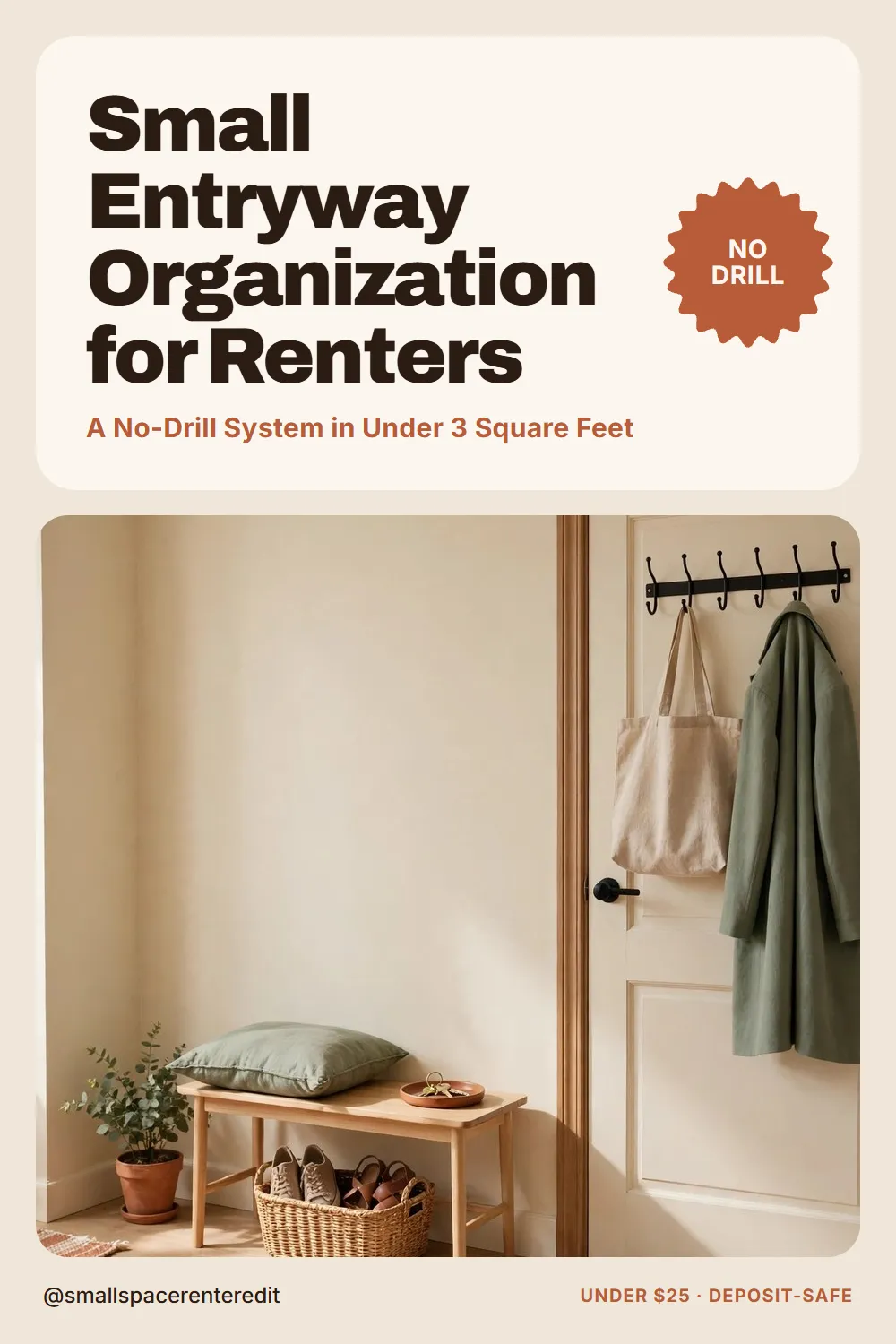
Most rental entryways are a door and a strip of floor. There is no closet, no wall to drill, and the coats, shoes, keys and mail end up on the nearest chair. This guide shows one small system for a studio or one-bedroom: a tray for the things you carry, hooks that hang over the door, a slim shoe rack, and a basket for scarves and hats. Everything fits in about 3 sq ft, an 18 x 24 in footprint, and nothing goes into the wall. It is written for renters, dorm students and anyone who just moved in. You need a tape measure and about 45 minutes. Prices were checked in November 2026 and will change, so measure your own door and floor before you buy.

Measure before you buy
Door thickness
Close the door and measure the edge from the inside face to the outside face, at the top where the hooks will sit.
Typical Interior doors are usually 1 3/8 in thick and exterior front doors usually 1 3/4 in. Measure yours, and check the hook package for the thickness it fits.
Floor footprint beside the door
Measure the width and depth of the floor space along the wall, and check that the door can still open fully.
Typical This guide plans for about 18 x 24 in, which is 3 sq ft.
Height of any shelf, radiator or vent near the door
Measure from the floor to the lowest edge of anything above the shoe rack, so you know how tall the rack can be.
Gap between the door and the wall when it is open
Open the door all the way and check whether hooks, bags or a coat will bump the wall or a piece of furniture.
Measurements are a guide, not a promise. Every apartment and every product is a little different, so measure yours before you order.
What you need
- Over-the-door quad or double hooksDollar Tree sells an over-the-door quad hook at this price. Check the package for the door thickness it fits and its weight rating.around $1.25 eachQty: 2
- Small tray for keys, wallet and mailA small shallow tray or a 3 pack of storage trays works. It sits on the shoe rack or any ledge, so it needs no mounting.around $2Qty: 1
- Single-tier slim shoe rackCheck the width and depth against your 18 x 24 in footprint. A two-tier expandable rack at Target was around $15 if you have more shoes.around $7Qty: 1
- Small woven basket, about 12 x 6 x 6 inFor hats, gloves and scarves. Pick a size that fits on or beside the shoe rack.around $10Qty: 1
- Freestanding coat rack (optional)Only if you have floor space beyond the 3 sq ft plan. Check the base width and the weight rating.Qty: 1
Prices are regular retail prices we saw in November 2026. They change often, so check the store before you buy.
Before you start
- Read your lease section on alterations. Over-the-door hooks and freestanding pieces are not modifications, but screws and nails might be.
- Check the thickness of your door and the thickness your hooks fit before you buy.
- Do not use adhesive hooks on a painted door unless you test a small hidden spot first. Adhesive can lift paint.
- Pull out shoes and coats you do not wear this season so you only plan for what you use daily.
Step by step
Measure the door and the floor first
Write down the door thickness, the floor space beside the door, and the height of anything above it. A footprint of 18 x 24 in is 3 sq ft, which is enough for one slim rack and a basket. If your space is smaller, buy only the hooks and the tray first.
Set up a landing spot for keys, wallet and mail
Put a small tray on the shoe rack, a shelf, or any flat ledge you already have. Everything you carry in your hands goes into it the moment you walk in. Use one tray for keys and wallet and sort mail into the recycling bin the same day so the tray does not fill up.
Hang over-the-door hooks for bags and coats
Slide the hooks over the top of the door so the hook sits on the inside face. Most fit a standard interior door of 1 3/8 in and some fit up to 1 3/4 in, so check your package. Hang the heavy items on the lower hooks and keep light items on top. Read the weight rating before loading.
Use the back of the front door
The inside face of the door is free storage. Put a bag and one coat on the hooks and keep only what you wear this week on them. Lift the hooks by the top rail when you remove them, so you do not drag the metal across the paint. A thin strip of felt on the hook backs can reduce scratching.
Add a slim shoe rack or shoe basket
Set the rack against the wall below the hooks. A single-tier rack holds a few pairs for everyday use. Keep out-of-season shoes in the closet or under the bed. A shallow shoe basket or boot tray works if you do not want a rack.
Put a basket next to the rack for hats and scarves
Set a small woven basket on the floor or on top of the rack. Roll scarves and tuck gloves and hats inside. Take one item out before you put another one in, so the basket does not overflow into a pile.
Choose a freestanding coat rack only if you have the room
If the door cannot hold what you own, a freestanding coat rack is deposit-safe because it needs no wall mounting. Check the base width against your floor space and keep it away from the door swing. Top-heavy racks can tip when loaded unevenly, so hang heavy coats low and near the base.
Before you buy anything, get the free starter checklist
Two printable pages: what to measure, what to buy first for about $25, and how to keep your deposit safe. Free, straight to your inbox.
Ready to do every room? Go straight to The System ($19)
Why it works
- It uses the back of the door and about 3 sq ft of floor, so you do not need a closet or a table.
- Every item has a fixed place, which makes the first 10 seconds after you walk in automatic.
- Nothing is screwed or glued to the wall, so there is nothing to patch when you move out.
Common mistakes that cost your deposit
MistakeSticking adhesive hooks on a painted front door
Do thisUse over-the-door hooks that rest on the door edge. If you do use adhesive, test a hidden spot and follow the package removal steps, since adhesive can lift paint.
MistakeLetting metal hooks scratch the door or the frame
Do thisAdd thin felt or rubber pads where the hook touches the door. Lift the hooks to remove them instead of sliding them.
MistakeBuying hooks that do not fit your door thickness
Do thisMeasure the door edge, and check the hook package for the thickness range. Front doors are often thicker than interior doors.
MistakeOverloading the hooks and bending the door off its latch
Do thisStay under the package weight rating. If the door does not close easily, move the heaviest items to a freestanding rack or a basket.
MistakePlacing the shoe rack where the door swings
Do thisOpen the door fully and mark the swing with tape before you place the rack.
How we measured this
Sizes, typical measurements and prices in this article come from the sources below. We do not invent product claims or reviews. Sources explain typical sizes, they are not a measurement of your apartment.
- Standard interior door thickness is 1 3/8 in
- Ferguson Home: standard exterior door thickness is 1 3/4 in
- Dollar Tree: Threshold Over the Door Quad Hook, price
- Target: Stackable Single Shoe Rack, price
- Target: Woven Water Hyacinth Rectangular Basket, 12 x 6 x 6 in, price
The image at the top is an illustrative image, not a photo of a specific rental. Check your lease before changing anything in your unit.
Keep going
All entryway ideas

